
Agentic AI & Engineering / 10.04.2026 / 8 min
The Dual-Audience Interface: Humans Feel the Brand, Agents Read the Code.
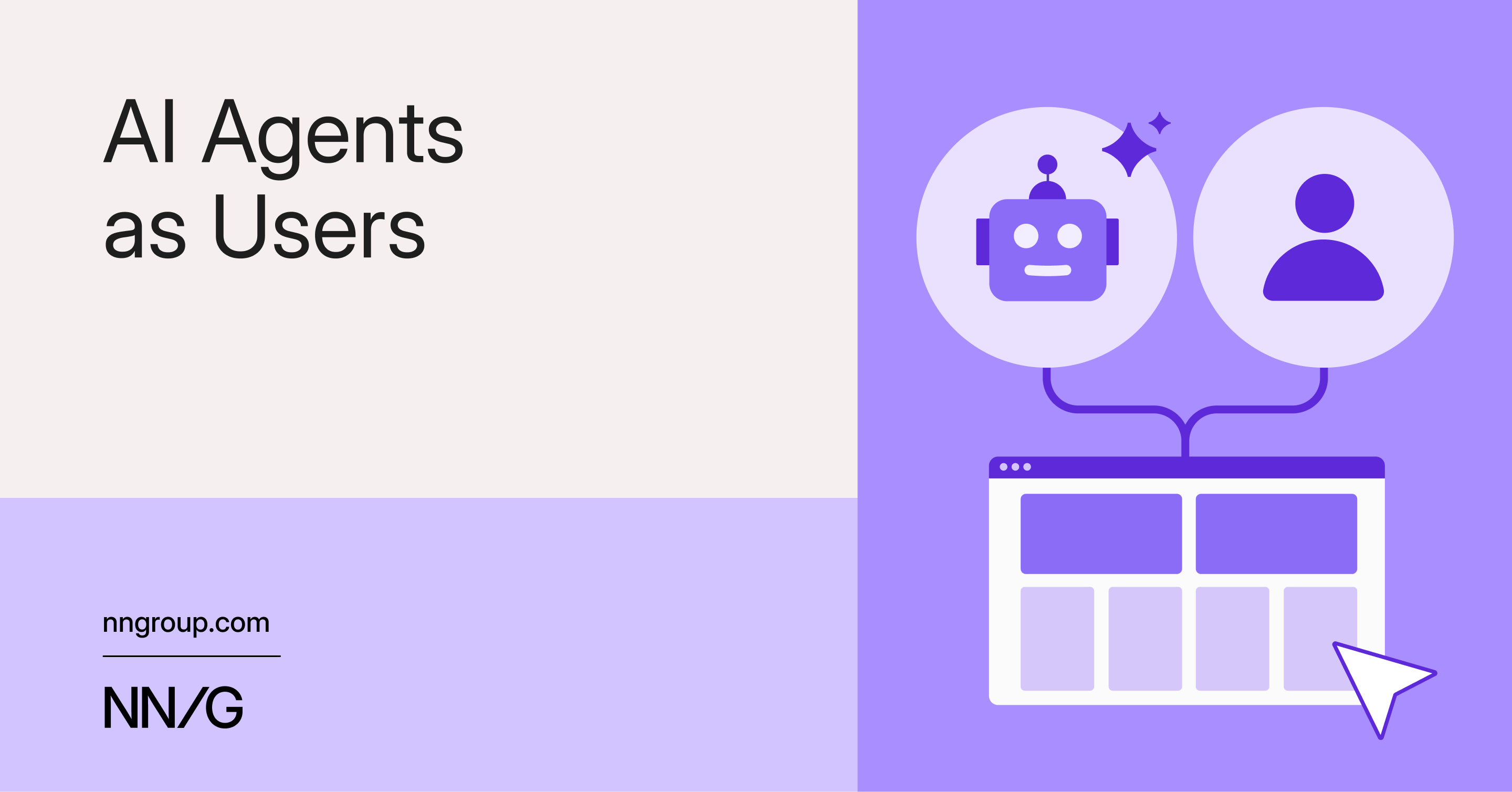
Throughout the history of digital interaction, one core assumption remained unquestioned: every 'user' was a biological human with eyes, cognitive load, attention spans, and fingers. In April 2026, Nielsen Norman Group issued a milestone analysis challenging that foundation: 'AI Agents as Users'. Autonomous software agents are no longer just backend scripts; they are actively navigating front-end websites, comparing products, booking reservations, and completing checkouts on behalf of consumers.
Unlike humans, an autonomous AI agent does not care about micro-animations, glassmorphism gradients, or editorial layout balance. Instead, an agent relies strictly on deterministic contracts: semantic HTML elements, accessible form labels (ARIA), structured data schemas, predictable error states, and clear execution pathways.
“When AI agents act as users, clean semantic markup and deterministic API contracts become the most critical design decisions you will make.”
This creates an imperative for modern agencies and development teams: the emergence of Agent Experience (AX). A website must now serve two simultaneous audiences with equal elegance. To human visitors, it must convey emotive brand storytelling, visual distinction, and intuitive delight. To AI agents and Google bots, it must provide a transparent, machine-readable infrastructure. Platforms built with disciplined semantic integrity will win the future of algorithmic commerce.
KEY RESEARCH TAKEAWAYS
- 01. Autonomous AI agents are becoming primary consumers of front-end web interfaces.
- 02. Agent Experience (AX) demands strict semantic HTML, accessible form inputs, and predictable interaction flows.
- 03. Google crawlers and AI search agents reward platforms that combine emotional human design with rigorous machine readability.
SOURCE & RESEARCH REFERENCE
Nielsen Norman Group — AI Agents as Users ↗